The Blueprint to Building a Website
Before beginning a website design project, you should first determine the structure (we ♡ this strategy portion!). In website design, we call this structure the sitemap. The sitemap lays out all of the pages and content that belong on your website.
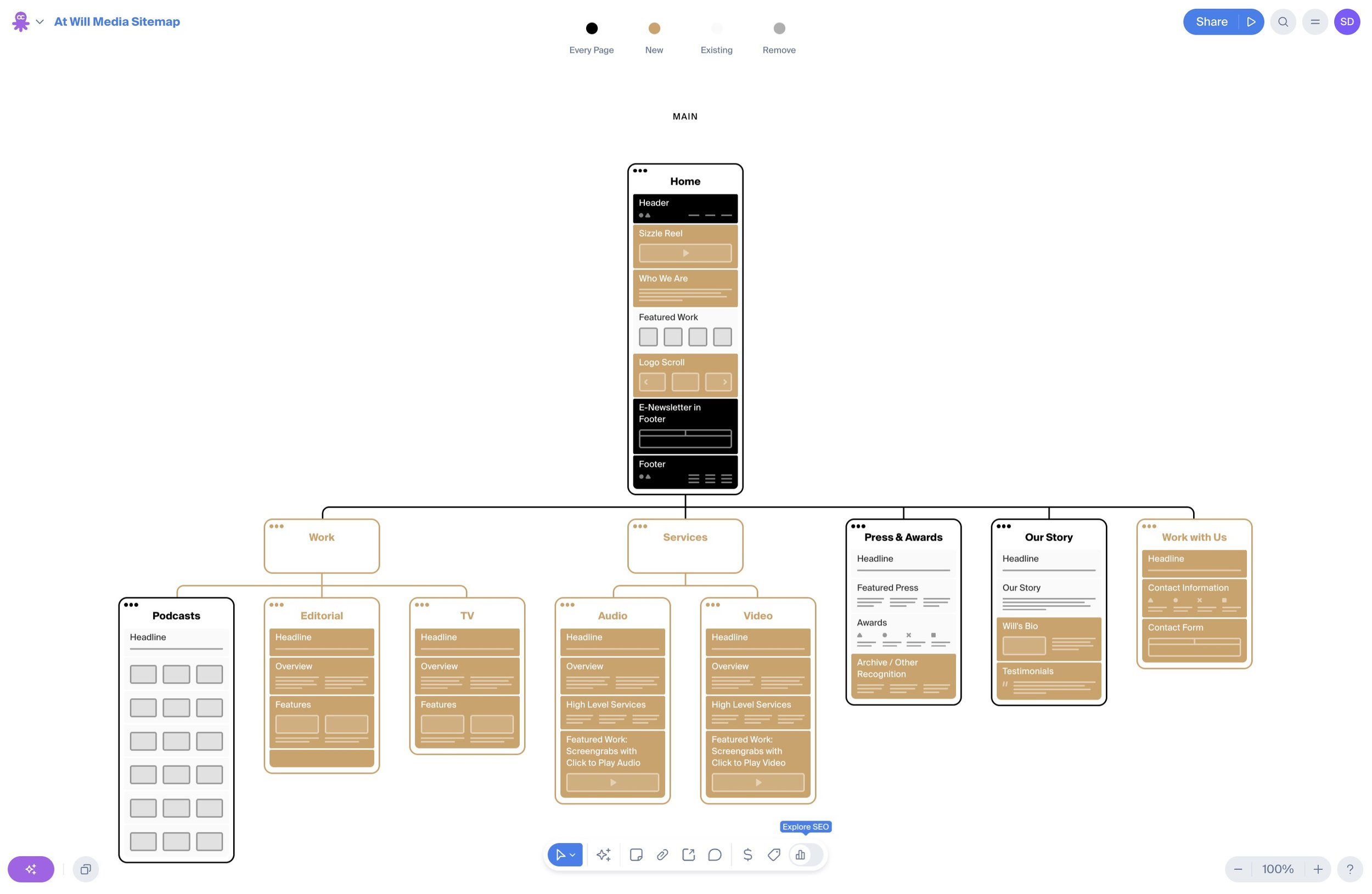
A website’s sitemap is much like a home’s blueprint. Like blueprints, the sitemap is referenced throughout the build. Without a blueprint, you might end up with a house with windows and doors in wonky places! Likewise, on a website, you wouldn’t create a contact page that didn’t include your phone number, email address, or location. Staring with a strong sitemap streamlines the website buildout and helps determine the list of upfront content and photography needs.
When working with our clients, we start with an in-depth meeting about their business called the Kick-off Call. During this meeting, we ask about a million and one questions about their company's audience, goals, and desired website features. Once we have a deep understanding of how visitors will use their website and what the primary goal for the site is (i.e. convert prospect into leads, sell a product, schedule a meeting, etc.), we are ready to create the sitemap.
For this process, we use a program called Octopus. It helps us lay out all of the pages and page sections in a clear way. We can also easily modify the structure as we meet with our clients during their sitemap-focused meeting, the Content Strategy Session. We come into this meeting with a rough outline of what their sitemap might look like based on our findings in the Kick-off call. Then, we collaborate, talking through each page, which sections need to be added or taken away, and how we can improve the flow of the site. We complete this sitemaping process with the mindset of the end user. What will make sense to a first-time website visitor? How can we direct the user to inquire about our client's services or purchase a product? The sitemap is intended to answer these questions and guide website visitors to take a specific action, whether that be completing a form or making a purchase.
At the end of this meeting, we have a finalized sitemap, as well as a content guide to help our clients write their website copy. We know this can be the trickiest part of the process, so try to set our clients up with the best possible resources to make copywriting a breeze! Throughout the website build, we reference the sitemap to ensure we are achieving our goals and completing all of the intended pages.
What pages will you include on your website's sitemap?
If you have any questions or want us to audit your site’s structure, shoot us an email at shelley@happenstance.design!
The Latest from Happenstance
✸
The Latest from Happenstance ✸